
Corporate Sustainability Reporting Directive (CSRD)
What is the Corporate Sustainability Reporting Directive?
The Corporate Sustainability Reporting Directive (CSRD) is a European Union (EU) directive that replaces the Non-Financial Reporting Directive (NFRD) as the standard for environmental, social and governance (ESG) reporting in the EU. The CSRD requirements expand and enhance the existing requirements of the NFRD to establish a unified and comparable approach for ESG reporting across nations and industries. This requirement will affect listed and privately held companies, requiring them to disclose information on how they monitor a wide range of ESG issues and their impact on our planet.
The primary objective of the CSRD is to foster transparency and accountability while advancing sustainable practices and investments. Under heightened stakeholder scrutiny and expanded reporting obligations, companies are compelled to disclose a broader spectrum of ESG metrics, offering stakeholders greater insight into their sustainability endeavours.
The CSRD requirements present a unique opportunity to deepen an organization’s understanding of sustainability risks and opportunities. By integrating reporting into their business strategy, companies can unlock the dual benefits of profit and purpose, safeguard their reputation, and drive sustainable growth.
What businesses does the CSRD affect?
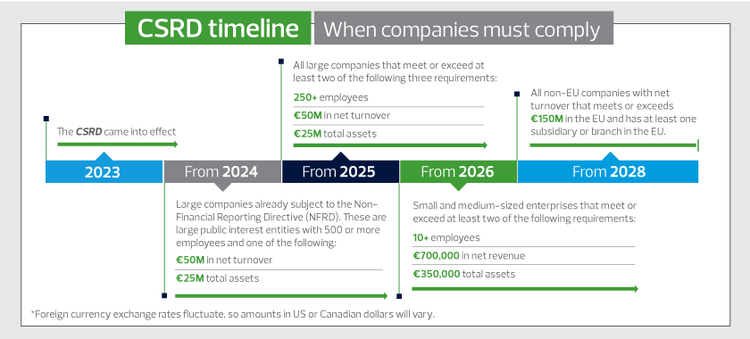
The CSRD will affect a larger number of companies than any previous sustainability regulation, and it sets higher standards for ESG disclosures. As it is currently written, around 50,000 companies globally will have to disclose, monitor and assess their sustainability performance. Consumer products, industrial products and financial services companies, in particular, should expect this to be a more significant effort, coupled with additional EU- and country-specific regulations.
Who is in scope for 2025?
The regulation has the following criteria that affect many types of organizations, including the following (note that certain content, like the criteria below, may be updated or adjusted following the approval of the EU Omnibus changes proposed by the EU commission in February 2025):
-
All listed companies in the EU
-
All large undertakings that meet or exceed two of these three criteria during the financial year:
- 25 million euros balance sheet total
- 50 million euros in net turnover
- Over 250 employees
In April 2025, the EU adopted the “stop-the-clock” directive, delaying CSRD reporting obligations for certain companies by up to two years. These changes affect large undertakings not previously subject to the NFRD, listed small and medium enterprises, and others. Further updates are to be released no earlier than October 2025.
How can companies comply with the CSRD?
To comply, companies must prepare and submit a CSRD report in electronic format in accordance with the European Sustainability Reporting Standards (ESRS) framework, track and disclose required information (including materiality process, sustainability risks, ESG performance, targets and goals), and seek limited assurance of sustainability information that will evolve into reasonable assurance over time.
What do U.S. companies need to know about the CSRD?
The CSRD affects non-EU-based subsidiaries connected to EU-regulated markets through their parent companies. It also affects businesses indirectly involved in EU-based value chains due to disclosures related to ESG impacts. The reporting entity may make data requests of companies within these value chains as in-scope entities report.
Non-EU parent companies with EU subsidiaries have multiple reporting options. Company leaders must decide the specific approach. Although these high-level options are not available for every company, they include the following:
Get CSRD-ready with RSM
The CSRD presents both challenges and opportunities for businesses striving to enhance their sustainability practices. Consulting with sustainability professionals can provide invaluable guidance tailored to the business's specific needs.
EU regulatory and CSRD applicability assessment
For organizations with more than two EU-operating entities, this assessment provides guidance on which entities may be in the scope of the CSRD. It also provides reporting pathways that may reduce the reporting burden, an initial visual timeline for reporting and the identification of any additional regulations that may be applicable.
Double materiality assessment
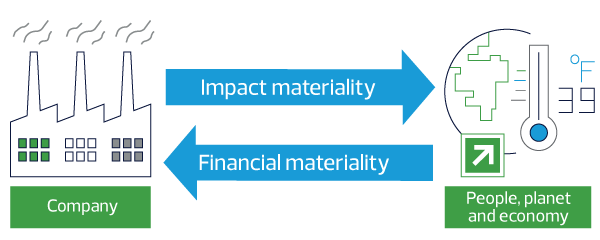
Companies subject to CSRD reporting must perform a double materiality assessment and undergo limited assurance initially (evolving into reasonable assurance) over the completed process. This assessment is designed to identify the material topics and scope of company reports and support alignment with CSRD guidance. This helps companies consider both their financial risks and the broader societal and environmental impacts of their activities.
Our assessment strives to provide organizations with two perspectives:
- Financial materiality (outside-in perspective): This approach, which is compatible with the standards of the IFRS International Sustainability Standards Board (ISSB), focuses on two types of sustainability matters that may affect the company’s finances. One is cash flow, or how funds may influence the company’s ability to use or obtain required resources. The second is relational (i.e. a company’s ability to rely on its relationships).
- Impact materiality (inside-out perspective): This approach, which is compatible with the Global Reporting Initiative (GRI) standards, identifies sustainability matters that may have significant impacts on people or the environment over the short, medium and long term. It includes identifying impacts across the entire value chain that the company directly causes or contributes to.
CSRD gap assessment
This assessment identifies gaps in the CSRD reporting process by analyzing the status of the materially found topics from the ESRS framework and pinpointing the key areas of focus for the achievement of CSRD compliance. In addition, the assessment identifies the minimum disclosure requirement, the available and required data, and the owner responsible for data processes.
Regulatory gap assessment
This assessment determines the company’s gaps in disclosures, processes and procedures across operational jurisdictions. It provides clients with the following:
- Comparative benchmarking
- The current state of ESG reporting gaps
- Visual illustration of the regulation to comply in the short term
- Future considerations for long-term compliance
- Prioritized high-level recommended initiatives
ESG software selection and implementation services
Our goal is to help companies navigate the complexities of sustainability reporting, risk management and data integration. By centralizing and managing ESG data efficiently, businesses can more effectively meet regulatory requirements, such as the CSRD, and improve decision making. RSM’s ESG software selection and implementation services are designed to simplify this journey, offering a comprehensive approach to identifying and optimizing solutions that align with the company’s unique business goals and drive measurable ESG performance.
Learn more about ESG software offerings
CSRD Advisory Services
Our ESG and sustainability advisory team can help organizations create roadmaps and navigate their path to compliance. Our team can assist with outlining steps to take, developing an overarching timeline and identifying high-level activities necessary to prepare for reporting requirements.
Sustainability and ESG insights
- /insights/esg/eu-sustainability-reporting-requirements
- /events/2024-events/navigating-the-csrd
- /insights/services/business-strategy-operations/welcome-to-the-third-wave-of-sustainability-reporting