

How does implementing human-centered design (HCD) solutions boost productivity, growth and profitability?
Learn how RSM’s HCD consulting advisors can help you improve customer and employee experience and promote brand loyalty.
In the age of experience, human-centered design (HCD) is no longer a nice-to-have approach. For businesses that want to maintain a competitive edge, total experience transformation has become a need-to-have. When leveraged effectively, HCD solutions can improve the employee experience (EX), productivity, efficiency, the customer experience (CX), brand loyalty and profitability—helping to ensure success in the middle market.
- Understanding that EX and CX are connected, with employee pride in providing a great customer experience driving satisfaction on both ends, is key to achieving increased return on investment across your organization.
- Investing in HCD brings a double return, increasing employee satisfaction and delivering a better customer and user experience.
- A positive customer experience still drives more purchases and brand loyalty compared to pricey advertising.
A proven EX and CX strategy
Ready to explore what your business stands to gain from HCD solutions? Start with CX or EX, or explore both with a free assessment workshop. Assessments with our HCD advisors provide an opportunity to dive into your challenges, objectives and current technology stack to gain insights into the “why” behind the behaviour of your customers and employees, learn about technologies built to solve your human experience challenges, and better understand the competitive advantage of HCD.
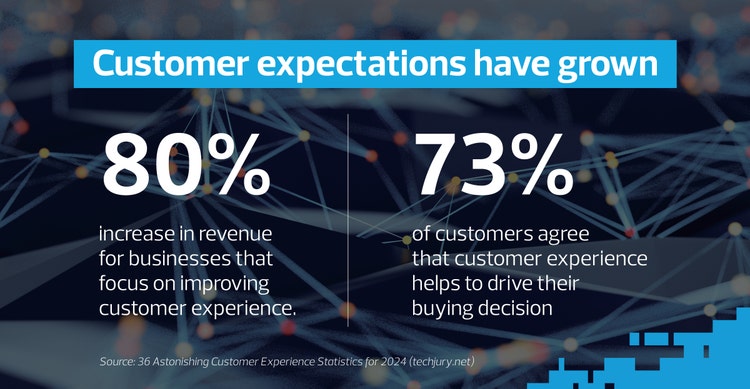
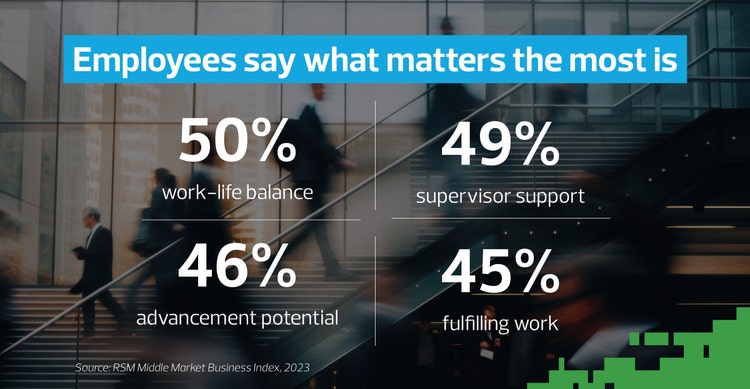
Table of contents
How does human-centered design improve employee retention?
What is customer experience and why is it important for my business?
Unlocking total experience transformation: Examples of human-centered design
Are you overfocusing on data to solve for CX and EX?
Data can tell you ‘what’ but not ‘why’
Business transformation is experience transformation
How can a human-centered design consultant help us gain a competitive advantage?
Understanding the advantage of HCD
How does human-centered design improve employee retention?
By aligning the business with how employees actually work, you can eliminate the real-world pain points and daily friction that affect employee satisfaction most.
Key to this approach is gaining a detailed understanding of the employee experience. By exploring the actual day-to-day lives of employees—their roles, their tasks, the tools they use and how they work with others throughout the organization—you can discover new possibilities to improve their work environment and processes.

What is customer experience and why is it important for my business?
CX is a critical determining factor in how people interact with your company, whether they purchase your goods and services, and whether they become loyal to your brand. A strong customer experience means creating frictionless processes for customers, with memorable interactions that grow business. Customer expectations are rapidly evolving, and getting the customer experience right can provide significant benefits and create a competitive advantage.
How to implement human-centered design in business
Unlocking total experience transformation
Examples of human-centered design
Customer acquisition and brand positioning
People rely on their local public broadcasting station for insightful news, community engagement and educational programming they can’t find anywhere else. As the chief experience officer for the station, Gabe is at the helm of a deeply loved and respected cultural and journalistic institution. It’s his job to ensure the station continues to meet the needs of its audience today while building the audience of tomorrow.
The challenge
While the local public broadcasting station plays a critical role in maintaining the culture of the community, its importance wasn’t matched by its revenue. With limited ability to run ads and no taxpayer support, most of its revenue comes from individual donors. But as its audience aged, its donor base wasn’t being replaced by younger viewers. Millennial and Gen Z viewers, along with traditionally underserved demographics, didn’t feel like the station resonated with their interests.
The solution
Gabe worked with his human-centered design consultant to seek new ways of reaching new audiences so that the station could continue to serve the entire community. By digging deep into how these audiences consume news and entertainment, Gabe pushed his station beyond the tried-and-true traditional approach of fundraising drives to reimagine the donor journey. In addition, he uncovered new insights into the types of content that would attract these audiences, allowing him to make programming changes to bring the station in line with viewer desires.
The result
By revolutionizing his donor outreach and content strategy, Gabe revitalized the station while positioning it to meet the needs of the next generation of donors. He also uncovered an opportunity to partner with a large local media company to generate new revenue streams, reach new audiences and grow his content creation base. A new community outreach campaign allowed the station to rebrand from stodgy to essential, while a new vice president of diversity, equity and inclusion helped the broadcaster be more relevant to audiences it used to ignore.
The lesson
Human-centered design can help you create a customer experience that is relevant to today’s customers. By leveraging human-centered design to reimagine your offering, you can acquire more customers and drive top-line revenue growth.

Employee recruitment and retention
The vitality of a health care provider comes down to its people. As chief talent officer for a regional, multihospital system, Javier is responsible for recruiting and retaining physicians, nurses and caregivers so that people throughout his community can get the care they need, when they need it.
The challenge
With demand for qualified health care professionals skyrocketing, Javier found himself in fierce competition for new talent. His hospital system is located in a Tier 3 market, which means it struggles to offer the same high salaries and advancement opportunities as hospitals in larger markets. The recruiting campaign he had previously run to attract talent was no longer bringing in enough applicants, which was especially critical at a time when the hospital was losing staff to competitors.
The solution
Javier worked with his human-centered design consultant to understand what applicants truly want. As part of the process, he discovered that they found his marketing materials outdated and conservative, inadvertently driving off interest. He also found that his hospitals tended to attract caregivers already in the community; he was wasting his dollars when targeting out-of-market caregivers. Thanks to his new insights, Javier created a fresh and dynamic approach to his recruitment efforts.
The result
The hospital system fixed process issues hindering recruitment. For example, Javier found that differing benefits across the system were hampering recruitment at certain facilities. He also refocused his spending on clinicians living within 45 minutes of a facility and created new advertising that better connected with potential recruits. To retain caregivers, Javier oversaw the remodel of staff breakrooms, and a new mobile app provided employees with easy access to laundry service, child care and other amenities.
The lesson
Human-centered design can help you align your organization with the needs and interests of employees and recruits, creating an advantage that can pay for itself when competing to hire and keep the top talent that ultimately drives revenue.
Human-centered design strategy considerations
Are you overfocusing on data to solve for CX and EX?
Data can tell you a lot about your customers’ and employees’ behaviour. With today’s powerful data analytics tools, mining and leveraging data-driven insights to build customer and employee experiences that reflect user desires, behaviours and preferences has become almost a given.
Data can tell you ‘what’ but not ‘why’
With all the advanced digital tools available, it’s easy to look to them for all the answers. But every business process is about user experience—i.e., people. This is where human-centered business consulting comes in.
While data can tell you what people do, it doesn’t tell you why they do it. When it comes to customer and employee experiences, people are more complicated than we think.
Many different psychological, emotional, and social factors drive employee and customer engagement, productivity, and loyalty.
Human-centered design consulting can help you better understand the human element of your business problems so you can incorporate the right technology solution in the most effective manner possible.
Business transformation is experience transformation
While your business may need digital solutions to achieve its objectives, those digital solutions ultimately all have users: customers, employees, vendors and partners. A huge risk of rushing technology selection is that you may end up implementing a solution that your users don’t like and won’t use. You can have great digital tools, but if the experience is ”meh,” they aren’t effective.
Business transformation, then, needs to start by looking at the broader business outcomes you’re trying to achieve, and all the human touchpoints involved in your processes. Rather than beginning with digital experience, you need to begin with people experience.
How can a human-centered design consultant help us gain a competitive advantage?
In the experience economy it is insights into human behaviour, psychology and user empathy that can fully enable improvement of the user experience. RSM’s HCD consulting services and solutions team enables you to understand the people fueling your business—bridging the gap between your business and your most valuable resources, and enabling achievement of your key business objectives, including:
- Increased top-and bottom-line growth
- Higher employee efficiency and productivity
- Greater business profitability
In a competitive market, a focus on people offers your business a real competitive advantage. Human-centered design puts your customers and employees at the center of each process and interaction, delivering experiences that feel more satisfying and drive deep brand loyalty.
More EX and CX insights
Additional human-centered design FAQs
Compared to a traditional approach, where employee experience solutions are mandated from the top down, a human-centered design approach helps uncover subtle nuances in the employee experience that may go unnoticed but have a significant impact on morale. You can then create tailored solutions that meet the specific needs of employees, streamline clunky processes, eliminate any areas of confusion or ambiguity, and ensure the employee experience keeps pace with the changes in a dynamic market and employment landscape.
In addition, a human-centered design approach to employee experience consulting may involve stakeholders from multiple departments instead of just HR, which creates a wider, deeper and more holistic understanding of the employee journey.
- A human-centered design approach starts with the emotional motivator that is behind each user action. By understanding what drives a purchase, click, share or other customer action, businesses can deliver new or better ways of making the customer experience more personalized and relevant.
- A traditional model often approaches CX in a vacuum. For example, a customer support function might focus on improving CX by hiring more staff to reduce call wait times, implementing new training modules or purchasing a new technology platform. Using a human-centered design approach, a business might instead discover an opportunity to improve its product or solution so that a customer’s needs are satisfied, eliminating the need for a call in the first place. By taking a holistic, collaborative approach, human-centered design can more effectively uncover solutions that drive more sustainable business outcomes.
- A human-centered design approach prioritizes a rapid, iterative approach. By engaging in a continuous process of prototyping, validating and optimizing a solution, businesses can leverage the feedback loop to identify a more effective solution and evolve it along with changing customer expectations.
By aligning the business with how employees actually work, you can eliminate the real-world pain points and daily friction that affect employee satisfaction most.
Key to this approach is creating a detailed understanding of the employee experience. By exploring the actual day-to-day lives of employees—their roles, their tasks, the tools they use and how they work with others throughout the organization—you can discover new possibilities to improve their work environment and processes.