
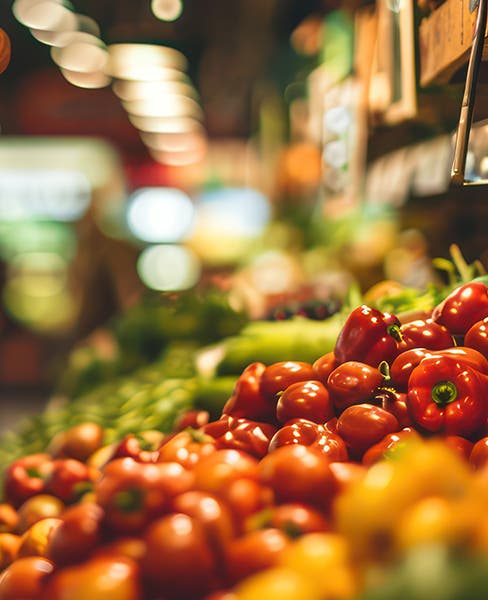
Innovative strategies in the grocery sector
Key takeaways



The grocery sector has undergone a seismic shift in recent years, driven by changing consumer behaviors, technological advancements and the lingering effects of the COVID-19 pandemic. As grocers navigate this evolving landscape, innovation has become not just a competitive advantage, but a necessity for survival and growth. Smart grocers are implementing innovative strategies to address ongoing business challenges.
Understanding the new grocery landscape
The modern grocery shopper is more informed and empowered than ever. With smartphones in hand, consumers can compare prices across stores in real time, making loyalty harder to secure and price competition fiercer. Traditional tactics—like placing staple items at the back of the store to encourage impulse buys near the front—are less effective as more shopping shifts online or to curbside pickup and delivery models.
This shift has forced grocers to rethink how they drive traffic, measure the effectiveness of promotions and deliver a seamless customer experience. The need for near real-time data and advanced analytics is now central to decision making.
Here’s how some savvy grocers are anticipating needs and addressing challenges with innovation.
1. Data-driven personalization and AI
Grocers are leveraging artificial intelligence and predictive analytics to create hyper-personalized shopping experiences. By analyzing customer purchase histories, preferences and even external factors like weather or local events, grocers can tailor promotions and recommendations to individual shoppers. Some stores integrate AI technology to personalize customer experiences, optimize in-store and supply chain operations, and automate deliveries.
Loyalty programs can also play a crucial role, providing the granular data needed to fuel these personalized strategies. Stores can create individualized profiles based on a customer’s shopping history, dietary preferences and other traits using predictive AI analysis of customer data contained in their customer loyalty program.
2. Frictionless checkout and automation
No one enjoys waiting in line, so grocers are investing in advanced self-checkout systems, frictionless payment options and even facial recognition for age verification. Mobile apps like scan-and-go allow shoppers to track purchases as they shop and check out quickly, while vision systems and AI help prevent theft and ensure accuracy.
Fulfillment centers and robotics are automating the picking and packing process for online orders, reducing costs and improving efficiency. While results are still mixed, automation is expected to play a growing role in the future of grocery operations.
3. Social media and influencer engagement
Grocers are increasingly partnering with influencers to reach busy families and health-conscious consumers. Influencers share quick recipes, meal kits and healthy eating tips, often featuring products from specific stores. This not only drives traffic but also positions the grocer as a resource for meal solutions and lifestyle inspiration.
4. Sustainability and waste reduction
Sustainability is both a branding opportunity and a business imperative. Grocers are adopting sustainable packaging, reusable bags and responsible sourcing practices. Advanced analytics help optimize inventory to reduce food waste, and software can automatically discount items nearing expiration to encourage sales before spoilage.
5. Dynamic pricing and market intelligence
Intelligent pricing platforms analyze local competition, market trends and product demand to recommend optimal prices for each store location. This enables grocers to remain competitive, especially when expanding into new markets, without sacrificing margins.
6. Operational efficiency and employee engagement
Electronic shelf labels and smart shelves automate price updates and inventory tracking, freeing up staff to focus on customer engagement rather than repetitive administrative tasks. This not only improves accuracy but also enhances the in-store experience.
Key considerations for grocers embracing innovation
- Data quality and integration: The foundation of any successful innovation is high-quality, harmonized data. Many grocers struggle with fragmented systems and inconsistent data models, which can undermine the effectiveness of AI and analytics. Investing in data integration and governance is essential.
- Customer-centric mindset: Innovation should always be guided by the goal of enhancing the customer experience—whether through convenience, personalization or value.
- Scalability and flexibility: Choose technologies and strategies that can scale with your business and adapt to changing market conditions.
- Employee enablement: Automation should free up staff for higher-value tasks, not replace them. Training and change management are critical to ensure employees can deliver the best possible service.
- Sustainability as strategy: Sustainable practices are increasingly important to consumers and can differentiate your brand while reducing costs.
- Continuous measurement: Use real-time analytics to monitor the effectiveness of promotions, pricing and operational changes, and be prepared to pivot quickly as needed.
The takeaway
Innovation in grocery is not about chasing the latest trend, but about strategically leveraging technology and data to solve real business challenges. By focusing on data-driven personalization, operational efficiency, sustainability and customer engagement, grocers can not only survive but thrive in today’s dynamic market. The key is to start with a clear understanding of your customers and your data, and to build from there—one innovative step at a time.